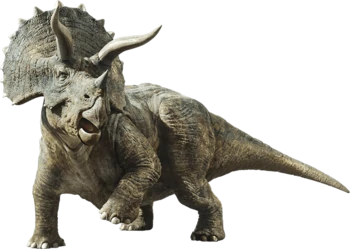
Triceratops is an extinct genus of herbivorous chasmosaurine ceratopsid dinosaur which lived at the very end of the Cretaceous period. It had a huge frilled head with horns over each eye that could reach over 3 feet long. Triceratops had a third, smaller horn on its nose. These would be fearsome weapons against a predator.
Triceratops is one of the most common dinosaur fossils found. More than 50 skulls have been found. Within the genus, at least 7 species have been identified. The ceratopsian family is one of the most successful and varied of the Late Cretaceous. Triceratops is the largest member of this family, reaching the size of a school bus.
Triceratops was a herd animal; it is believed that large groups numbering into the hundreds roamed North America. Their large, horny beaks and long rows of teeth were well designed for chewing the tough, low-growing plants of the Late Cretaceous. It was likely the main predator of these animals was Tyrannosaurus rex. A number of skeletons show bite and chew marks that match the teeth of T. rex. Horns and frills seemed to vary among individuals within the species. Some frills were very broad, others narrow. The nasal horn shows the most variance among individual specimens, no two being the same. The material that covered its horns in life would have added significantly to the length of the fossilized bone.
Thirteen Triceratops were created by InGen in their compound on Isla Sorna where they were taken care of by the workers there.
Triceratops were highly sociable. However, they were also aggressive as well, so they had to be treated with care. They had two skin variations, one being brown and the other being beige with stripes down the back.
Unlike the originals, these clones have elephant-like feet instead of pronounced claws on the innermost of three of its five toes and have jugal horns on their cheeks instead of one. The adult clones have epoccipitals on their frills instead of the juveniles.
At the age of about a few months, three Triceratops were taken to live on Isla Nublar to live as an attraction for InGen's Jurassic Park. They lived in their own paddock.
InGen's Triceratops ranged from 8.8 to 10.7 meters (29-35 feet) in length and 2.7 to 4.6 meters (9-15 feet) in height, with the largest individuals being encountered on Isla Sorna in 2001.