Now to a lot of people that sounds limiting, but in reality they hold a very important place in your bag. They certainly do in mine.
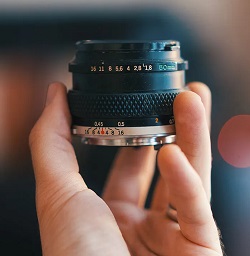 The term prime has come to mean the opposite of zoom—a fixed-focal-length, or unifocal lens.
While a prime lens of a given focal length is less versatile than a zoom lens, it is often of superior optical quality,
wider maximum aperture, lighter weight, and smaller size. These advantages stem from having fewer moving parts, optical
elements optimized for one particular focal length, and a less complicated lens formula that creates fewer optical aberration
issues. Larger maximum aperture (smaller f-number) facilitates photography in lower light, and a shallower depth of field.
A normal lens or "normal prime" is a lens with a focal length about equal to the diagonal size of the film or sensor format,
or that reproduces perspective that generally looks "natural" to a human observer under normal viewing conditions.
The term prime has come to mean the opposite of zoom—a fixed-focal-length, or unifocal lens.
While a prime lens of a given focal length is less versatile than a zoom lens, it is often of superior optical quality,
wider maximum aperture, lighter weight, and smaller size. These advantages stem from having fewer moving parts, optical
elements optimized for one particular focal length, and a less complicated lens formula that creates fewer optical aberration
issues. Larger maximum aperture (smaller f-number) facilitates photography in lower light, and a shallower depth of field.
A normal lens or "normal prime" is a lens with a focal length about equal to the diagonal size of the film or sensor format,
or that reproduces perspective that generally looks "natural" to a human observer under normal viewing conditions.
One of the great things about prime lenses is that they can help sharpen your technique. With these lenses, you can’t rely on zoom to get the shot you want. You are the zoom. And your physical choices will affect the angle and zoom of the photo.
Why choose a prime lens? A prime lens definition means little if you don’t know how or why you’d want to use one. Check the video below highlighting the benefits of using a prime lens. Wide Apertures Isolate Subject and Let More Light In Wide aperture settings in a prime lens serve a dual purpose, and can really enhance the quality of your images. Read more about how aperture works if you need a refresher. But otherwise you know that a wide aperture, (or low f/stop number), creates a shallow depth of field. Meaning there is a narrower range of focus in the image. The background is blurred and out of focus, while only the subject remains in focus. This blurred background allows the subject to stand out, creating some incredible looking stills. Another benefit of the wide maximum apertures on prime lenses is the amount of light that can get it. A wider aperture lets in more light, which is ideal for low-light situations.
Prime Lenses Have Sharper Image Quality When there are fewer focal lengths to account for, there is less distortion or aberration. It is much simpler to create sharper, better quality images. Zoom lenses on the other hand, are designed for multiple focal lengths. While zoom lenses allow more options, there will always be some trade-offs in performance, size, and even price.
Primes give the best value Again, because there is less distortion, and overall better image quality, you typically get more for your money when it comes time to purchase. You can take a look at some prime vs zoom lens’ prices in this purchasing guide.
Primes are more compact The less mechanics inside the lens, the lighter the lens, which makes it incredibly beneficial when traveling. Even if you do have to bring two lenses of different focal lengths with you, they’re generally both lighter than one zoom lens. It really depends on what you’re looking to get out of your shots.